

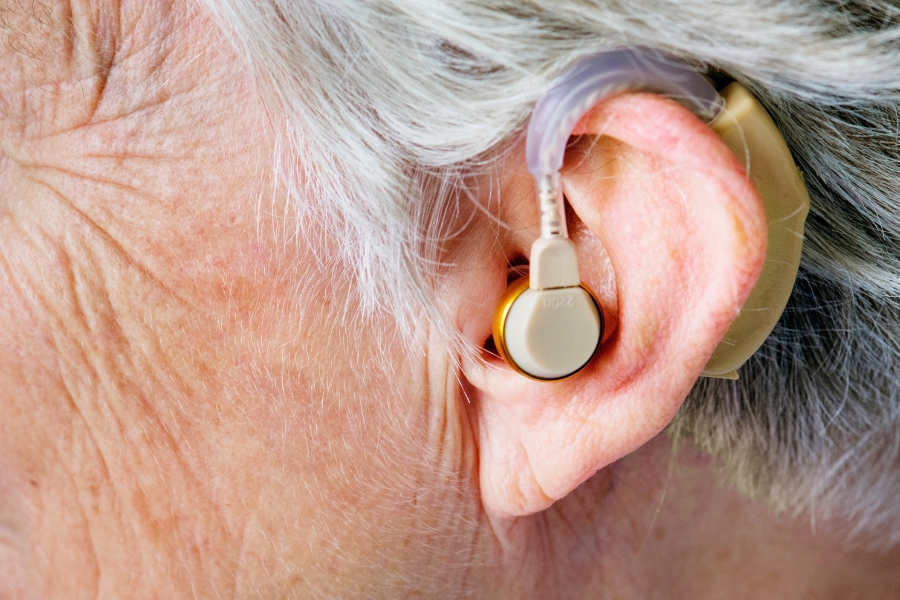
- What to Expect During Your First Weeks with Hearing Aids
- Key Tips for Adjusting Hearing Aid Features for Best Results
- Common Adjustments: Overcoming Early Challenges
- The Importance of Follow-Up Care at Minnesota ENT
- Frequently Asked Questions
If you’ve recently invested in new hearing aids, you might feel a mix of excitement and overwhelm. That is completely normal. Adjusting to enhanced sound, new physical sensations, and digital features takes time. However, with a little guidance, patience, and the right care, your devices can significantly improve your quality of life.
At Minnesota ENT, our experienced audiology team has helped thousands of patients across Minneapolis and the Twin Cities navigate this transition. In this guide, we’ll share essential tips to help you maximize your new technology, learn to adjust your digital features, and recognize what to expect during your first few weeks.
What to Expect During Your First Weeks with Hearing Aids
Modern hearing aids are not just simple sound amplifiers; they are highly sophisticated computers customized to your specific hearing profile. As your brain re-learns how to process sounds it hasn’t heard in a while, everyday environments may feel surprisingly loud or sharp at first.
Many new users experience:
- Increased background noise awareness: Sounds like rustling paper, footsteps, or a running refrigerator might seem intensely loud.
- Listening fatigue: Your brain is working overtime to process new data, which can leave you feeling tired by evening.
- A technology learning curve: Getting used to manual volume controls, Bluetooth pairing, or smartphone app settings takes a little practice.
Most people completely adapt within 2 to 4 weeks. Consistent daily use is key to retraining your brain to filter out background noise naturally.
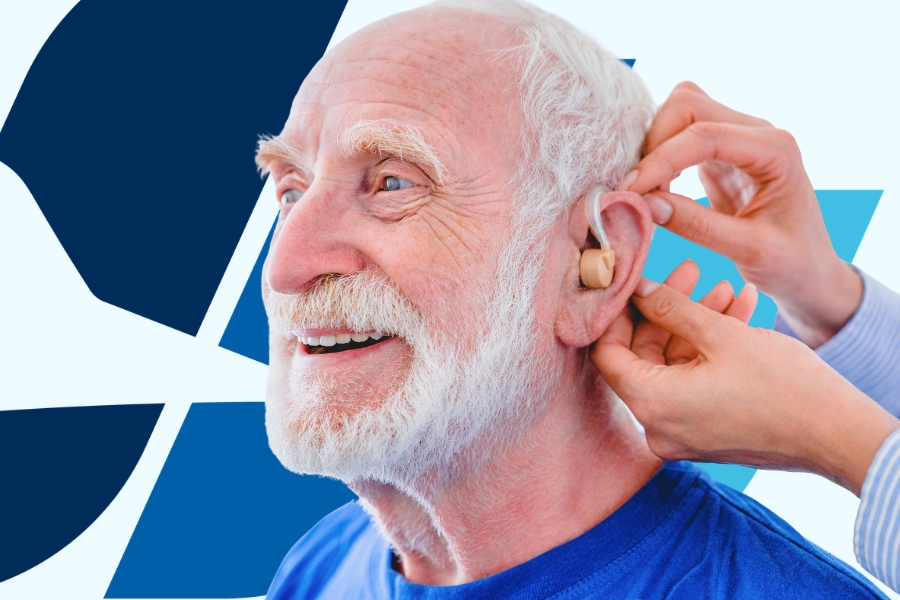
Key Tips for Adjusting Hearing Aid Features for Best Results
Even though your devices are precisely programmed based on your initial hearing test, real-world environments are where fine-tuning truly matters. Here is how to handle your hearing aid adjustments for optimal clarity and comfort:
1. Start Slow and Build Up Wear Time
Don’t feel rushed to wear your devices for 14 hours on day one. Begin by wearing your hearing aids for a few hours a day in quiet environments (like your living room), then gradually increase your wear time. This step-by-step approach prevents listening fatigue and supports healthy brain adaptation.
2. Master Your Digital Features
Today’s advanced digital hearing technology is equipped with automated features designed to make listening effortless. Ask your audiologist in the Twin Cities to walk you through settings such as:
- Dynamic Noise Reduction: Automatically quietens chaotic background noise in busy environments.
- Directional Microphones: Shifts focus directly to the person speaking in front of you.
- Feedback Suppression: Instantly cancels out annoying whistling or buzzing sounds before they reach your ear.
- Bluetooth Streaming: Connects your hearing aids directly to your smartphone, TV, or tablet for crystal-clear audio.
3. Use the Smartphone App
Most new styles connect directly to a dedicated smartphone app. This gives you discrete, real-world control to:
- Quickly adjust the volume depending on your setting (e.g., a quiet office vs. a noisy restaurant).
- Switch between pre-programmed sound environments.
- Monitor your battery life and request remote adjustments from your provider.
Need help setting up your technology? Bring your smartphone to your next follow-up appointment at Minnesota ENT, and our team will walk you through the app step-by-step.
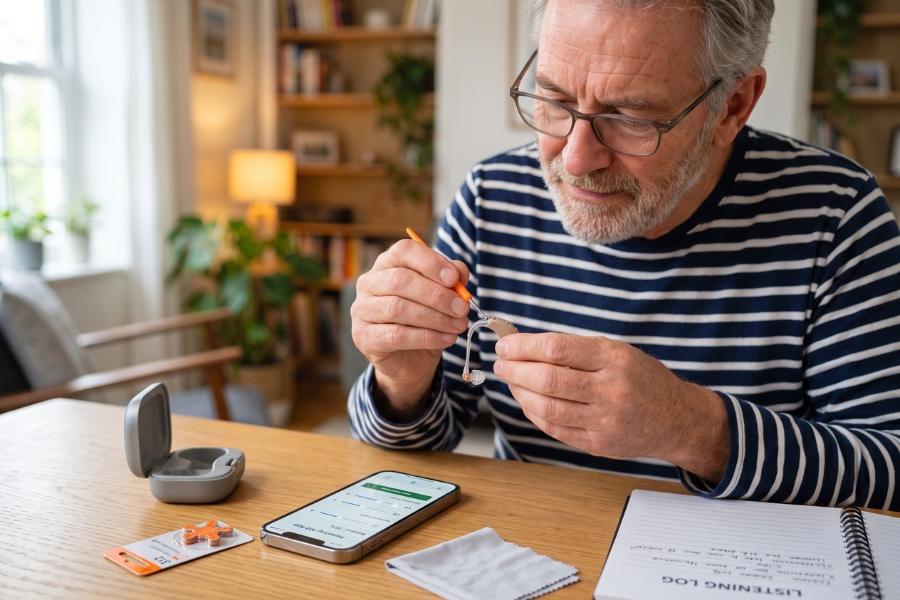
4. Keep a “Listening Log”
Note when sounds feel too sharp, echoey, or distorted. Jotting down brief notes about your experiences in specific environments (like at church, a family dinner, or watching TV) gives your audiologist the exact clues they need to perfectly fine-tune your devices at your next visit.
Common Adjustments: Overcoming Early Challenges
If you encounter a few bumps in the road, minor adjustments can easily fix them:
- Your voice sounds hollow or like an echo: This is called the occlusion effect. It often improves as you adapt, but your audiologist can adjust the physical fit or low-frequency settings if it persists.
- The physical fit feels uncomfortable: Never suffer through ear pain. If a device rubs or pinches, schedule a quick refit at our clinic. Swapping out a dome size or modifying a custom earmold usually solves the problem instantly.
- Battery drain or connectivity issues: Ensure your devices are fully charged or clean. If Bluetooth drops out frequently, our team can check for firmware updates.
The Importance of Follow-Up Care at Minnesota ENT
Your journey to better hearing doesn’t end the day you pick up your devices. Comprehensive follow-up care is the secret ingredient to long-term success.
At Minnesota ENT, we schedule regular check-ins during your trial period to ensure your hearing aids fit comfortably, you feel confident maintaining them, and your real-world hearing clarity aligns perfectly with your lifestyle goals.
Ready to maximize your hearing health? Whether you need a hearing aid adjustment or want to explore the latest technology, schedule a consultation with our expert audiology team at Minnesota ENT today.
Frequently Asked Questions
Most people adjust within 2 to 4 weeks, depending on their level of hearing loss. During this time, your brain is relearning how to process sound. The Hearing Loss Association of America recommends consistent use and regular follow-up visits to support the process.
Yes, once you’ve eased into use, wearing your hearing aids during all waking hours helps you adapt more quickly. Just remember to remove them during bathing and sleeping.
Discomfort or overly sharp sound can usually be resolved with a quick adjustment. According to ASHA, audiologists can modify amplification levels and physical fit to resolve these issues.
Yes. Most modern hearing aids are Bluetooth-enabled. You can stream phone calls, music, or TV audio. Need help setting it up? Our team at Minnesota ENT is happy to assist.
Daily cleaning, regular battery replacement (or recharging), and keeping them dry are essential. For deeper maintenance or performance issues, NIDCD offers detailed tips, or you can visit Minnesota ENT for professional support.